
In this article, we are going to discuss the conventional sources of electrical energy. There are mainly three types of conventional sources of electrical energy:
- Thermal Power Plant (Coal Thermal Power Plant and Diesel Thermal Power Plant)
- Nuclear Power Plant
- Hydel Power Plant
Thermal Power Plant
In a thermal power plant, coal is first pulverized into a fine powder to increase its calorific value and improve combustion efficiency. Coal is the main fuel used in this type of thermal power plant.
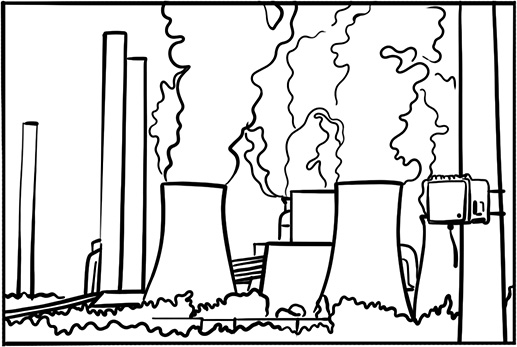
The pulverized coal is burned inside a furnace and produces heat energy. This heat is transferred to a boiler, inside which distilled water is converted into steam at high pressure.
Two types of boilers are generally used:
- Fire Tube Boiler
- Water Tube Boiler
In a water tube boiler, the tubes contain water, and heat is supplied from outside the tubes.
In a fire tube boiler, the hot flue gases pass through the tubes inside the water vessel, so the surrounding water gets converted into steam.
The steam is then reheated and superheated to become high-pressure steam. This high-pressure steam is released through a nozzle at very high velocity onto the turbine. As a result, the turbine rotates. The shaft of the turbine is directly coupled to an electrical alternator. Hence, the alternator also rotates. The rotating alternator generates three-phase electrical energy, which is then stepped up at the generating substation for transmission purposes.
Nuclear Power Plant
The concept of a nuclear power plant is more or less the same. The only difference is that the heat energy is not produced by burning coal or diesel fuel. Here, a nuclear reaction produces a large amount of heat, which is used to generate steam in the boiler. The remaining process of electricity generation is more or less the same as that of a coal thermal power plant.
So, the main difference lies only in the method of producing heat in the boiler, which is achieved by a nuclear reaction instead of burning fuel.
Hydel Power Plant
In a hydel power plant, the difference in the water head causes water to flow from the upstream side to the downstream side at high speed. A turbine is placed in the downstream flow of water so that the flowing water rotates the turbine.
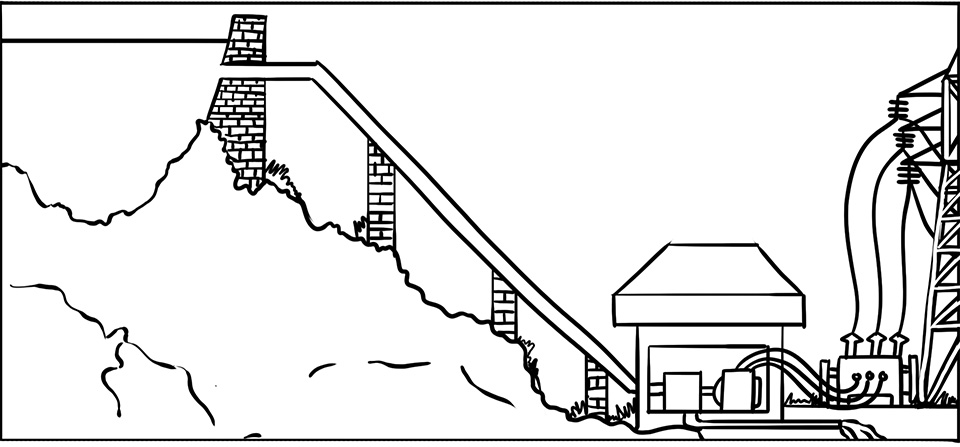
The rotating turbine is directly coupled to the generator. As a result, the generator, or alternator, produces three-phase electrical energy. This electrical energy is then stepped up at the generating substation for transmission purposes.
Diesel Thermal Power Plant
A diesel thermal power plant is also included in the conventional sources of electrical energy. The only difference is that, instead of burning coal, diesel is used as the fuel to produce heat, which is then used to generate steam in the boiler. The remaining process of electricity generation is similar to that of a coal thermal power plant.
Conclusion
These are the three main types of conventional sources of electrical energy. I hope you got the basic idea of the conventional sources of electrical energy.