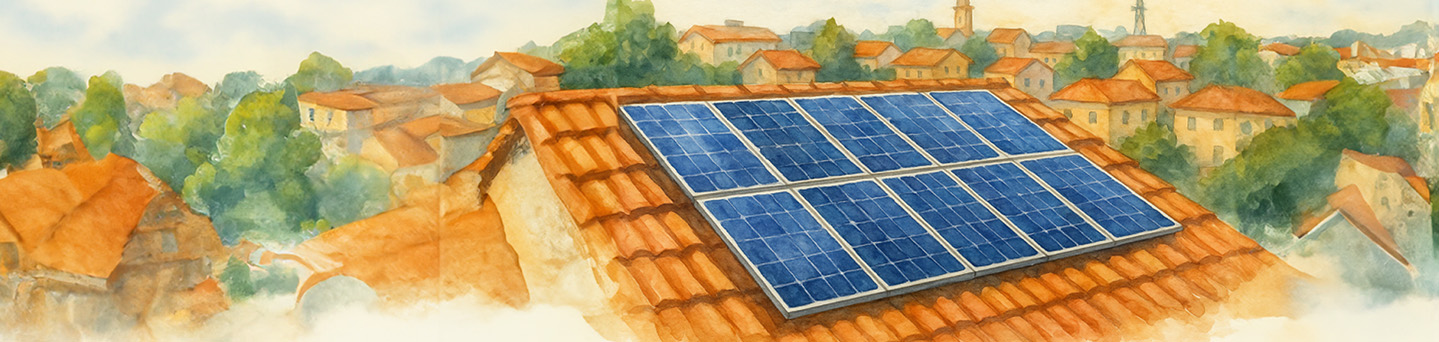
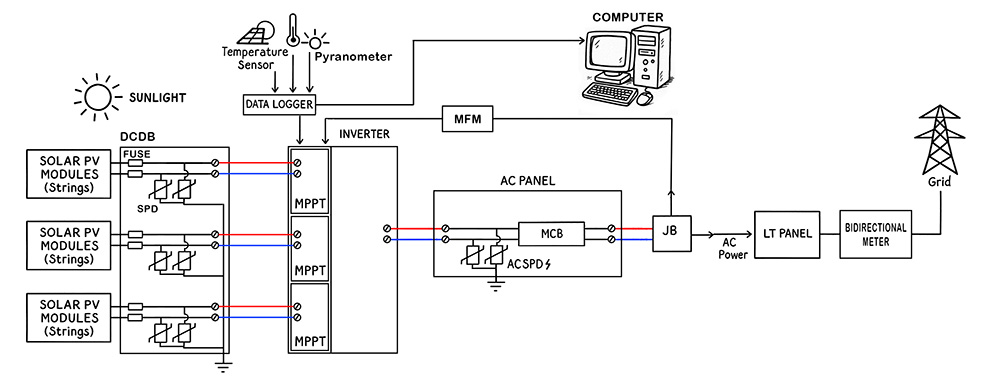
A grid-connected rooftop solar power plant converts sunlight into electricity. It supplies power to a building. It also sends extra power to the electric grid. The system works step by step from left to right.
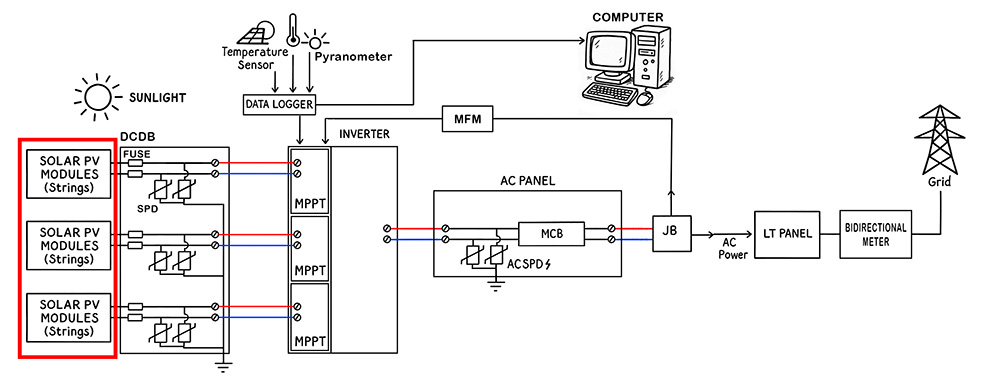
Rooftop Solar Modules
A Solar PV module contains a predetermined number of photovoltaic cells. Solar PV modules are installed on the rooftop. Therefore, sunlight falls on the modules. The modules generate direct current electricity. Hence, it produces DC power. Several modules connect in series. These series connections form strings. Obviously, More strings mean more power.
DC Distribution Board
Each solar string sends DC power to the DC Distribution Board. We refer to this board as DCDB. The DCDB protects the system. So, it contains DC fuses. The fuses protect against overcurrent. The DCDB also includes a DC surge protection device. The SPD protects the system from lightning and voltage surges. Also, it combines multiple strings.

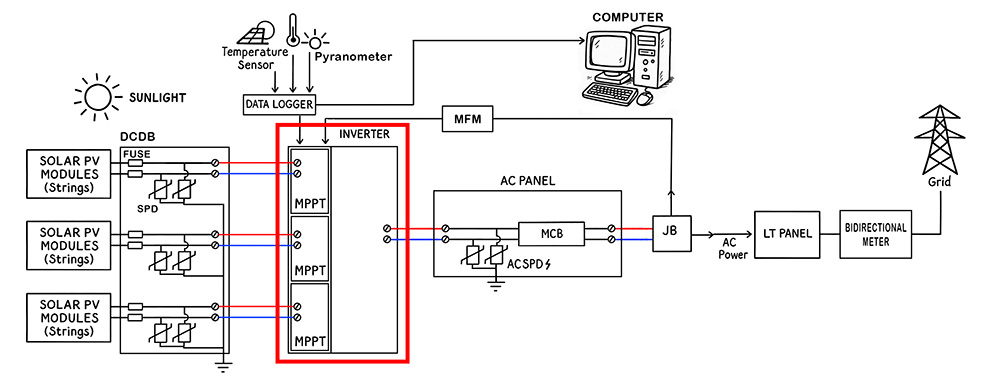
Grid Tie Inverter
Then, DC power moves to the inverter. The inverter is the most important device. It converts DC power into AC power. Then the inverter supplies this AC power to either the load or to the grid as required. The inverter also matches the grid voltage and frequency. Moreover, it ensures grid safety. It ensures safety by isolating the inverter from the grid during the event of an unsynchronized condition.
MPPT
The inverter has MPPT units. MPPT means Maximum Power Point Tracking. Each MPPT controls one or more strings. It adjusts voltage and current. Also, it extracts maximum power from the solar panels. Obviously, it works automatically.
Monitoring Systems
The system also includes a monitoring arrangement. A pyranometer measures sunlight. Additionally, temperature sensors measure panel or ambient temperature. These sensors send data to a data logger. Then the data logger collects all information. It sends the data to a computer. This system helps in monitoring performance. It does not carry power.
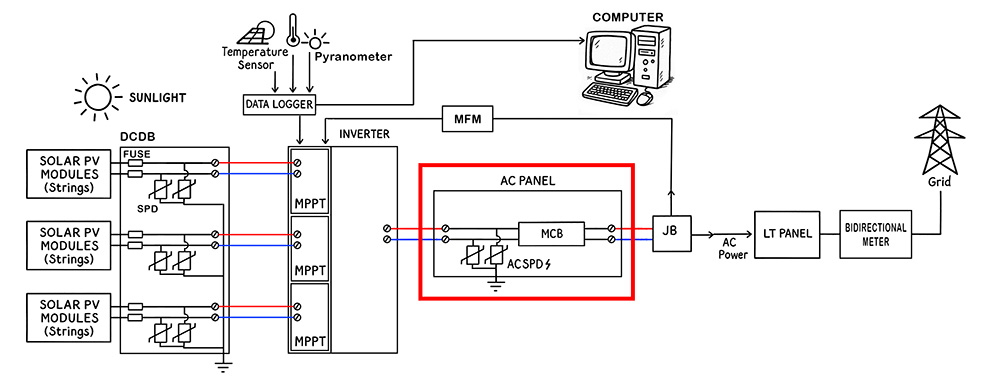
AC Distribution Board
After conversion, AC power flows to the AC Distribution Board. We call it ACDB. The ACDB contains an MCB. The MCB protects against AC faults. The ACDB also includes an AC surge protection device. It protects the system from AC-side surges. From the ACDB, power passes through a junction box. The junction box helps in cable connection.
LT Panel
Power then enters the LT panel. The LT panel is the main electrical panel of the building. It distributes power to loads and the grid.
We will install a bidirectional energy meter next. This meter measures imported energy. It also measures exported energy. Thus, it records the net metering. Hence, it helps in energy billing and record-keeping.
Finally, the system connects to the utility grid. When solar power is more than the load demand, power goes to the grid. When solar power is less, power comes from the grid. If the grid fails, the inverter disconnects automatically. This ensures safety.
Earthing
Proper earthing is very important. The DCDB is earthed. The inverter is earthed. The ACDB is earthed. The surge protection devices are earthed. The module structure is also earthed. Earthing protects people and equipment.
